The Vertical Holds the Holes, the Tapered Holds the Seams: Dividing Accuracy Across Every Model, Explained in One Article
When the weight of a divided piece is off, the first move is always an adjustment.
Adjust the pressure, adjust the time, swap the controller, change the electrical scheme.
Wrong direction from the first step.
A customer asked me a question once.
"You have a lot of models. On every one of them, what actually holds the dividing accuracy?"
That is a professional question, and it is not an easy one, because it forces you to split the word "accuracy" apart first. In this industry, "dividing accuracy" carries at least three numbers at the same time: piece-weight deviation, machining tolerance, and rated capacity. Different units, different jobs.
Quoting a machining tolerance as weight accuracy is a category error. 0.04 mm is the geometric tolerance on a sealing face. It is the supporting evidence for air-tightness. Weight accuracy is the spread of what you deliver, and it is measured on a scale, as a distribution.
We keep those two apart internally. We keep them apart in public too.
So this article does not answer "are you accurate". It answers something narrower: on every model, which dimension does the weight of one piece get decided in.
1. First, the model list: these are two different dividing principles
"Every model" has to land somewhere.
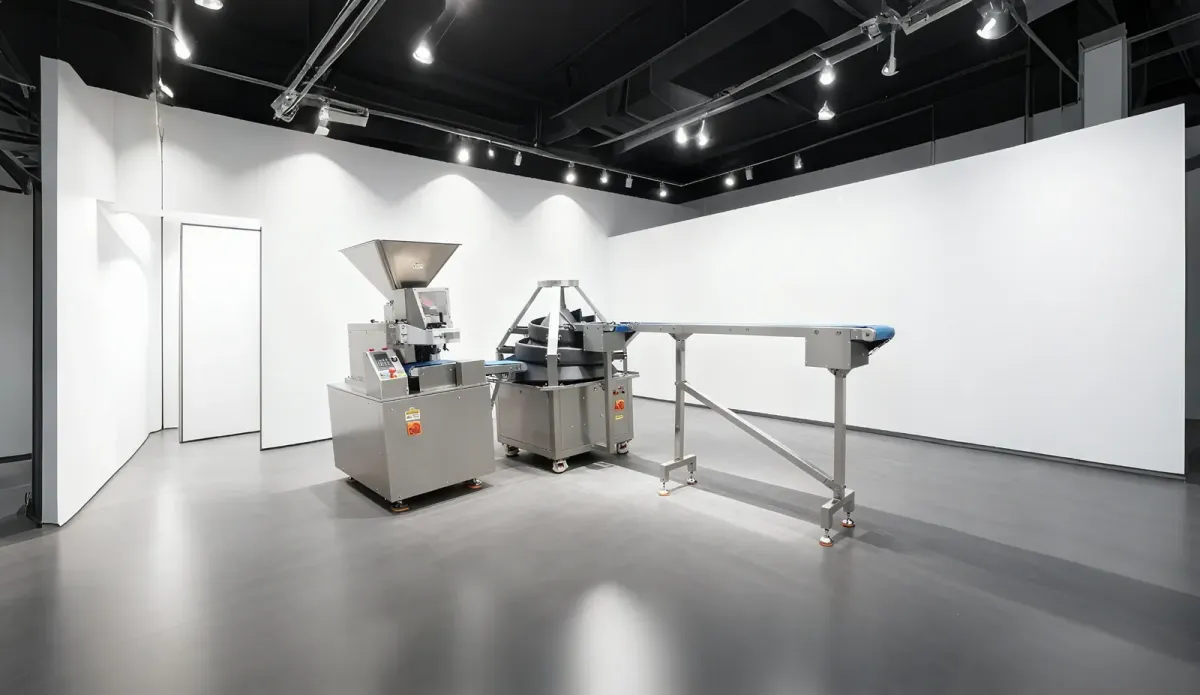
The vertical line has four models. The Smart Dough Divider & Rounder (Vertical), model BK-Smart. And under the Semi-Automatic Dough Divider & Rounder (Vertical), three models: BK-Ultra, RM-Pro and RM-Basic.
The tapered line is a pair of machines: a divider (BAFP or BAFC series) and a tapered rounder (BAG series). Together they are sold as the Tapered Divider & Rounder.
The difference between the two lines is not the price bracket. It is the principle.
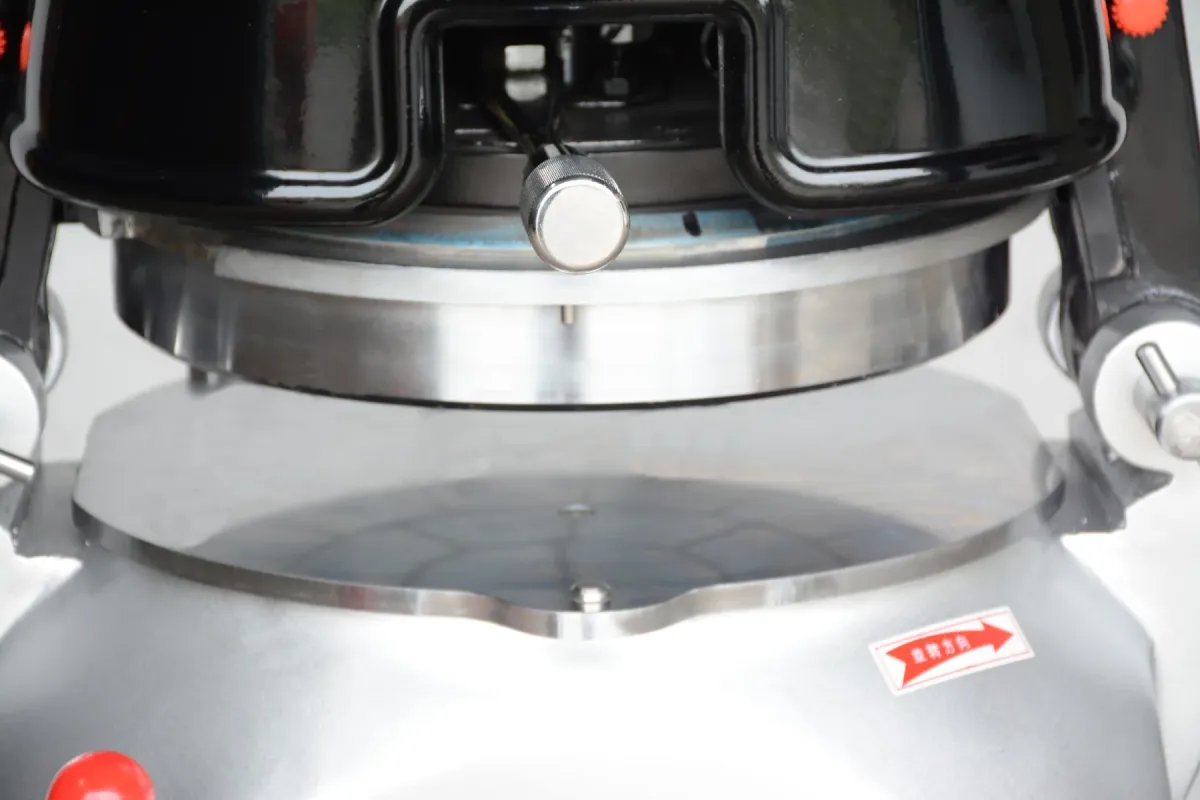
The vertical divides by pressing. The head pushes dough into the holes on the cutter disc, the knife cuts flush with the disc face, and the pieces drop into the rounding plate.
The tapered divides by vacuum. The piston pulls back, negative pressure forms in the chamber, dough is drawn into the metering chamber, and the knife cuts at the moment the dough is held.
One presses it in. The other pulls it in.
So the vertical holds the holes, and the tapered holds the seams.
That sentence is the spine of this article. The next two sections are one on holes, one on seams.
2. The vertical line: weight is fixed at the cutter disc
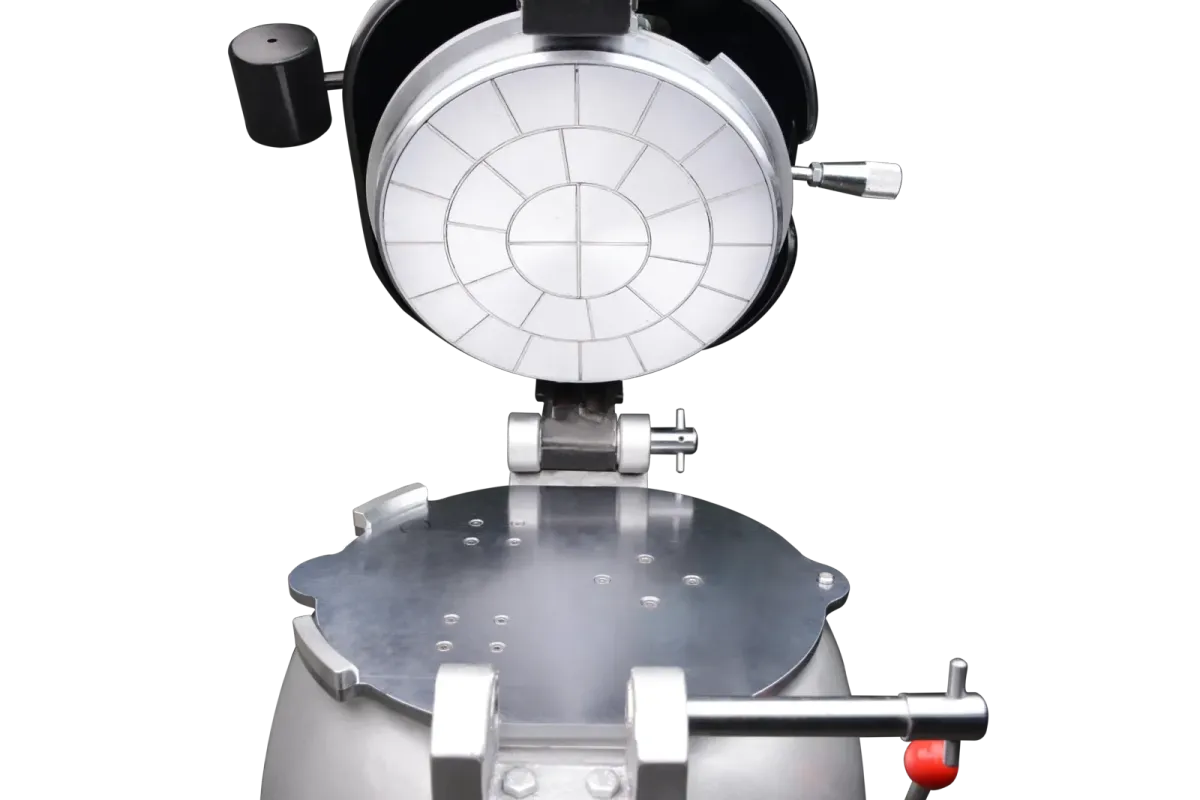
Three moves. The whole dough mass goes onto the disc. Head down, dough pressed into the holes. Knife cuts flush with the disc, pieces drop into the rounding plate and get rounded.
Weight is settled between move one and move two.
Rounding changes shape, surface and roundness. It does not change weight.
One thing worth separating here: rounding time is yours to set, to 1-second accuracy. That feature is on the two BK models, the BK-Smart and the BK-Ultra. The RM-Pro and the RM-Basic have no timer and are fully manual. But that second controls roundness, not weight. Two separate jobs.
Weight per piece is three numbers multiplied: cavity volume x dough density x fill ratio.
In plain words: how big the hole is; how much one cubic centimetre of your dough weighs; and whether the hole actually filled on this stroke.
Three multipliers, three clear owners. Density belongs to your recipe. Water content, flour, fat and dough temperature all sit inside it, and the same batch measures differently by the afternoon. That is physics; no machine changes it. Volume belongs to our tooling and machining. Fill ratio is whether the hole filled on this press.
Most people assume the first two are given and only the third is the machine's job.
The third one is a consequence of the first two.
If the holes are off, one stroke fills and the next does not. If the knife rack does not mate tightly with the blind holes, dough creeps into the gap and the hole comes up short.
Fill ratio is never dialled in on its own. It is what volume and fit add up to.
So when a customer feels inaccurate, eight times out of ten it comes from the third multiplier. The first two are static, set once. The third is recomputed on every stroke, and if the machine has one loose spot it hands you a different answer each time.
Line it up and you get ±3 g. Miss it and you get 5 g, 8 g, depending on your luck.
So how are the three held?
One: cavity volume comes from tooling, not from sorting parts.
A 36-piece disc has 36 holes. With bought-in discs there is exactly one thing you can do: sort. Pick the ones at the front of the tolerance band this batch, and next batch? When the supplier changes a machine tool? When they change a material supplier? Sorting hands your accuracy to somebody else's machine.
We make our own tooling and hold our own tolerance. The disc then goes through a grinding pass, and that pass is about surface finish and where the size lands, not about looking good. A rough hole wall means friction, and the same pressure fills less, so that piece comes out light. Worse, it holds dough: the rough wall keeps residue from the last stroke, the next stroke fills short, and the same hole gives you one light piece and one heavy piece.
There is one more detail almost nobody connects to accuracy: chrome. The dough-contact faces of the cutter disc and the rounding plate are fully chrome-plated, and how even that plating is changes the volume directly. A thicker layer makes the hole smaller. An uneven layer makes one side of the disc differ from the other.
So full chrome plating is not only about washing. It is part of the accuracy.
Two: the knife rack, the layer most factories will not discuss.
The rack has to mate with the blind holes in the middle of the disc, and that fit is brutally narrow. Thicker blade: it rides on the disc, wears fast, and the metal it wears off goes into the dough. That stops being an accuracy problem and becomes a food-safety one. Thinner blade: the gap opens, dough packs into it, and if you do not clear it the next stroke's weight moves. Clearing it means stripping the head every day. When a customer complains that the machine has to be washed daily or it is useless, the root is usually here.
Too thick fails. Too thin fails. The distance in between is the most expensive stretch on the whole disc. It is held by welding.
Our knife racks are welded by an engineer who has spent twenty years on vertical divider-rounders. Outsiders hear joining two pieces of steel. Anyone who has done it knows welding is heat input, and heat input drags distortion behind it. How much flatness the rack loses after welding decides whether the knife can run flush against the disc face.
So what has to be fixed is not one number but four: how much tolerance to leave between parts; how much flatness to hold after welding; whether the weld strength survives the cutting stroke; where to place the welds, in what order, and how to verify afterwards.
Those four numbers came out one version at a time. They are not in any handbook, and no supplier will sell them to you. And no set of numbers lasts forever: 16, 26, 30 and 36 pieces each need the whole set built again from scratch.
Three: wear. The first two decide whether it is accurate on the day it leaves. The third decides whether it is accurate three months later.
This is where customers actually get hurt. On trial day the pieces all weigh right. Back in the workshop for three months, weight starts to drift, and the morning reading is not the afternoon reading.
The drift comes from three places that wear.
The locating of the rotating parts. The disc turns, so it is located somewhere, and the thing to fear is bearing fatigue spalling. Spalling starts, position moves, and the distance between knife and blind hole moves with it. The knife edge. Once blunt it no longer cuts but tears, and tearing takes dough with it and leaves dough behind, so one piece goes light and one goes heavy. The plating on the hole wall. The layer is the last correction on volume, and it wears too: thinner and the hole grows, rougher and it starts holding dough.
The third is the nastiest, because it changes across all 36 holes together rather than one piece at a time. You cannot see which piece is wrong. You just feel that this batch seems lighter overall.
Accuracy is geometry. Drift is time. The buyer judges accuracy; the operator is tortured by drift.
So how do the four vertical models divide this work?
The first two, hole volume and rack fit, are the same mechanical logic across all four. The differences lie elsewhere: who performs the press, and whether the rounding timer lives on a screen. The BK-Smart lifts with an electric actuator and runs the whole cycle from one button. The BK-Ultra has the smart timer with the press still done by hand, and keeps both the manual and automatic ways. The RM-Pro and the RM-Basic have no timer and no actuator, and are fully manual.
Those differences decide who presses and when it stops. They do not change how much one piece weighs.
So the ±3 g claim is the same across all four.
But the boundary belongs in print, otherwise the claim becomes an exaggeration: the 10 g minimum is the BK-Smart only; every other model starts at 20 g, including with a 36-piece disc.
Not because the disc cannot do it. Because the smaller the piece, the bigger the share that the same small error takes: 1 g over on a 20 g piece is 5%. On a 200 g piece it is 0.5%.
Shrink the denominator and every hidden fault in the machine shows up.
3. The tapered line: weight is pulled in, and it is fixed on three sealing faces
A divider does not weigh dough. It fills a chamber with it.
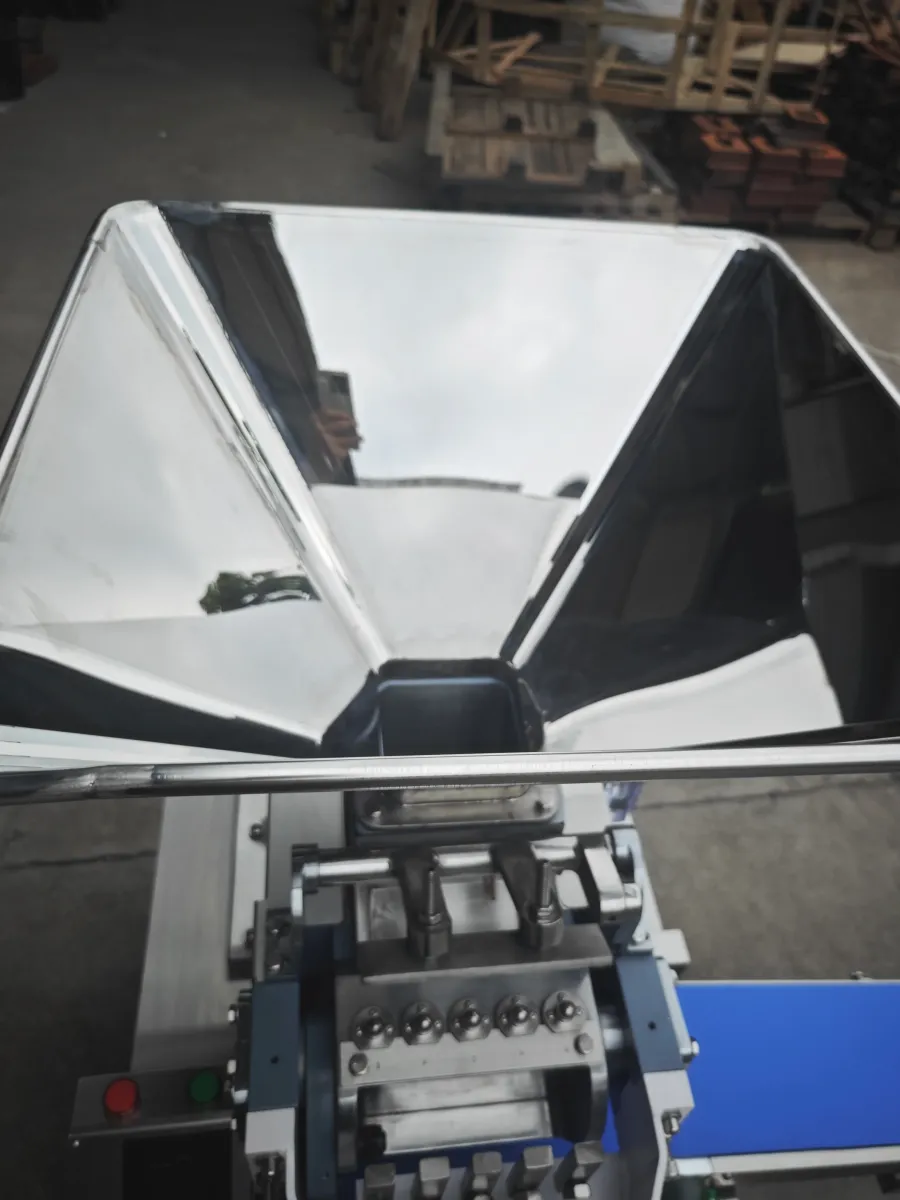
The piston pulls back, negative pressure forms in the chamber, dough is drawn into the metering chamber, and the knife cuts at the moment the dough is held. The weight of a piece is the volume that chamber takes in one pull.
So the chain runs one way, four links: vacuum pickup, air-tightness, three sealing faces, machining accuracy.
The direction does not reverse. The control panel does not create weight; it only sets the target. That matters, because it tells you where to look when the weight is wrong. Most people reach for settings, a new controller, a different electrical scheme. Wrong direction from the first step. When the weight will not come up, check machining accuracy and the three sealing faces first, then air-tightness, and only then the electrics and the settings.
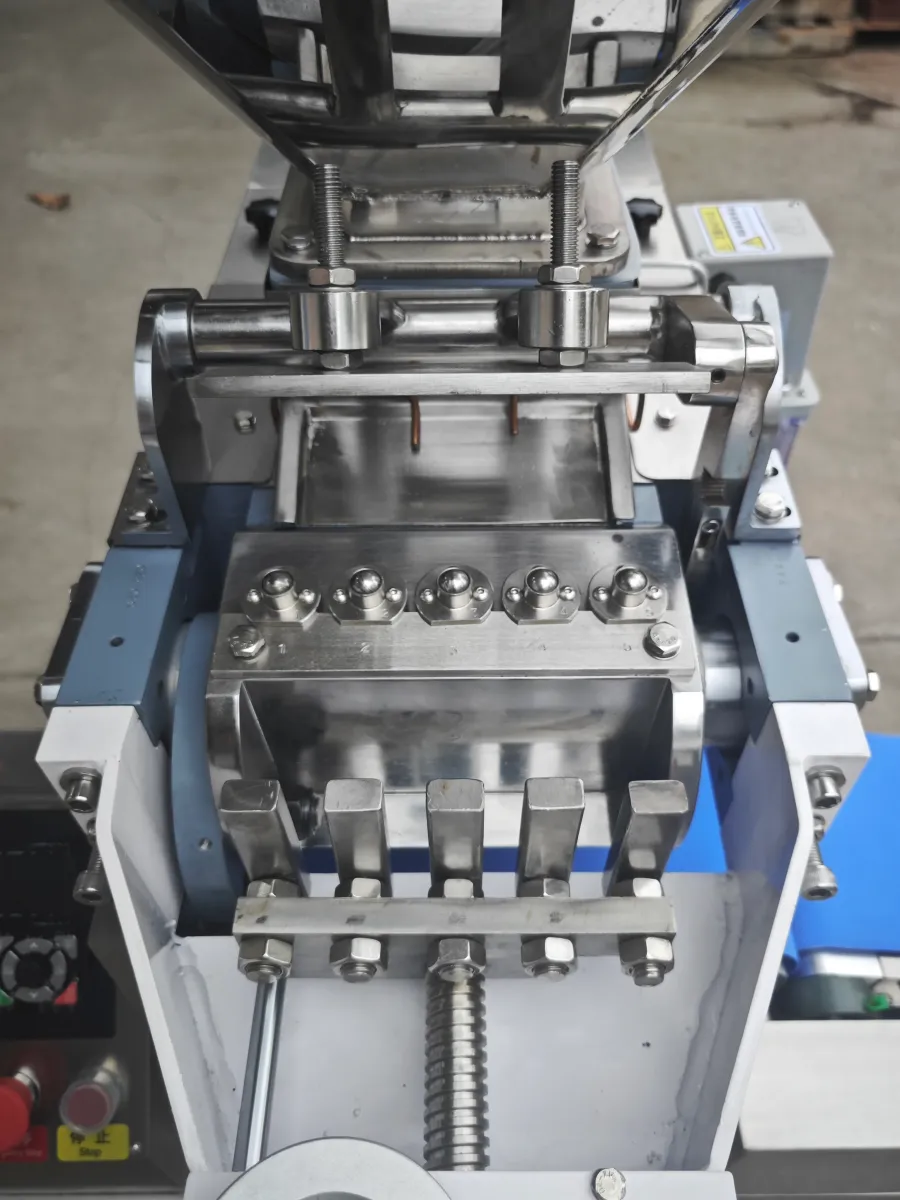
Which three faces? The base, the bottom seal. The pusher, the piston-pair mating face. And the front, the panel joint face.
A chamber is never sealed by one face. It is sealed when all three hold at once. Any leak drops the vacuum, low vacuum under-fills the chamber, and an under-filled chamber lowers the weight ceiling.
That is why a machine rated 110 g that delivers 95 g is not rare in this industry: the rating is written on a full chamber, and the delivered value is limited by the air-tightness you actually have. The gap between rated and delivered is, at bottom, the gap in air-tightness.
Our machining tolerance is 0.04 mm. Leading brands are typically at 0.08 mm, the industry norm is 0.1 mm.
Beyond the seals, three things you cannot see on a drawing.
Load-bearing face width. Ours is 185 mm, leading brands run 147 mm. The missing 38 mm lands on small pieces as pressure window. With a small opening and small dough, whether that push gets in decides how far off this piece is.
Locating. The common practice is a bronze bushing, and a bushing loosens as it wears. Accurate today, drifting after 3000 pieces, and drifting in no fixed direction. We use a bearing seat: when it wears you swap one part and you are back at the factory position, so piece 1 and piece 3000 stand on the same point.
Heat treatment on the key friction faces. Skip it and after two or three hours the clearance has moved, the vacuum leaks a little, and the weight starts drifting. Morning and afternoon stop agreeing.
Those three, plus the three sealing faces, are what let a 3P standard divider, the BAFP-3P, hold 110 g when it is rated 110 g.
It has boundaries too, and they belong here, not in a footnote.
110 g is the per-piece ceiling of the 3P standard model, the BAFP-3P. The computerised BAFC-3P is 100 g. A single BAG-series tapered rounder covers 10 to 300 g. The 30 to 600 g figure that circulates is the whole line plus 12 to 13 tooling sets covering the range in segments. It is not one machine, and above 250 g is custom tooling. Please do not accept a machine against 600 g on a single unit.
Acceptance needs four things written down: which machine, which tooling, which dough, which target weight. All four, or it is not an acceptance condition.
There is also a boundary in the principle itself. Vacuum pickup is volumetric: it divides by volume, not by weight. High water content means a thin, low-density dough, so the same chamber takes in less weight. Cold dough is stiff and does not fill. On the BAG series tapered rounder, 60 to 75 percent water content tests best. The BAFP series divider is rated for 55 to 78 percent. They are not the same specification, so do not quote one for the other.
4. Two lines, one method
Put the two lines back together and the method is three sentences.
One: get the weight down to a single geometric feature.
For the vertical it is the holes on the cutter disc. For the tapered it is the chamber that the three sealing faces enclose. A machine where you cannot name that feature is a machine that leans on settings. Accuracy that leans on settings goes back the moment you change the batch.
Two: own that feature yourself.
Our own tooling, our own grinding, our own plating spec. Our own knife-rack welding, our own 0.04 mm, our own three sealing faces. Buying in is easier, and it hands your accuracy to somebody else's machine and somebody else's batch.
Three: answer the question of whether it will still be accurate in three months.
That question is far harder than staying accurate out of the factory, and few will answer it unasked. On the vertical the three wear points are locating, edge and plating. On the tapered they are piston-pair wear, material density, and sealing faces that were never right to begin with. All three roads end in the same place: that gap.
Is the clearance still even once the machine is assembled; is it still stable after tens of millions of strokes.
The first half is about assembly. The second half is about wear. One is space, the other is time.
5. Four things you can check yourself
Craft is talk. Distribution comes off a scale.
One. A continuous 100-piece weight distribution. Not one piece held up for you: take 100 in a row while the machine is running steadily, weigh and log every one. Then three numbers: mean, range, standard deviation. The last step matters most. Sort the 100 and count how many fall below your lower limit. The industry's usual sampling is a group of 8 to 12 judged by standard deviation. We raise the bar to 100 pieces, because 8 cannot show you the tail and 100 can.
Two. Run your own recipe. Send a sample, or come yourself, and run a batch on your own dough. The machine adapts to your dough, not the other way round. That sentence is not a slogan; it is settled on a trial bench.
Three. Match the tooling to the target. Ask first which of the four vertical models you are buying, and which disc your target weight sits in. Driving a 30 g piece through a 16-piece disc is not an accuracy problem, it is the wrong tool.
Four. Ask the question most suppliers would rather not answer: how far has the weight moved on your current machine since the year it arrived, and do you have the re-check data from that old machine?
The last word
Dividing accuracy comes down to one sentence.
Weight is not in the settings. It is in one geometric feature.
On the vertical, the holes in the cutter disc. On the tapered, the chamber enclosed by three sealing faces. Hold that feature and the machine has a right to claim accuracy. Lose it and the spec sheet says nothing that matters.
A shape can be copied in three days. This feature takes years.
We will not tell you these machines never need adjusting.
We will tell you this: they do not send you back to reset the weight because something quietly wore loose.